
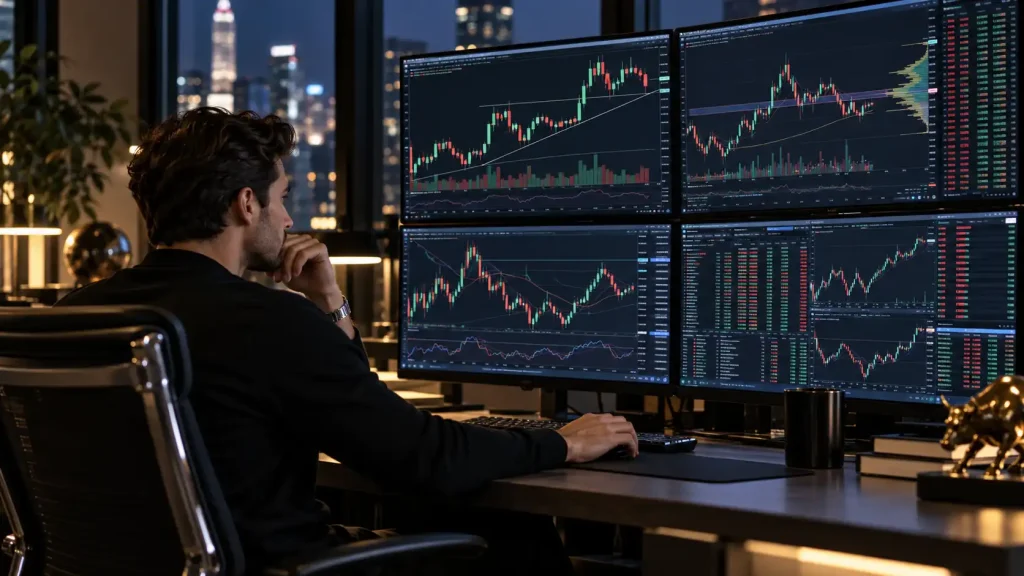
Day trading futures can be an exciting way to participate in financial markets, but success requires more than simply buying and selling contracts. Futures trading involves understanding market behavior, managing risk, developing discipline, and following a structured approach.
For beginners, the biggest challenge is not finding trades — it is building the knowledge and habits needed to make consistent decisions.
This guide explains what futures trading is, how day trading futures works, and the important steps beginners should take before entering the market.
What Is Futures Trading?
Futures trading involves buying and selling contracts that represent an agreement to trade an asset at a specific price.
Unlike traditional investing, where traders may hold stocks or assets for months or years, day traders typically open and close their positions within the same trading session.
Futures contracts are available for different markets, including:
- Stock indexes
- Commodities
- Currencies
- Energy markets
- Interest rates
- Cryptocurrencies
Popular futures markets among day traders include index futures such as S&P 500, Nasdaq, and Dow Jones futures.
What Is Day Trading Futures?
Day trading futures means entering and exiting futures positions within the same day.
A day trader attempts to take advantage of short-term price movements instead of holding positions overnight.
For example, a trader may analyze market conditions in the morning, enter a futures position based on their strategy, and close the trade before the market session ends.
Day trading requires:
- Understanding price movement
- Reading market structure
- Managing emotions
- Following a trading plan
- Controlling risk
Why Do Traders Choose Futures?
Futures markets have several features that attract active traders.
High Market Liquidity
Many futures markets have high trading volume, which allows traders to enter and exit positions more easily.
Extended Trading Hours
Many futures markets trade nearly 24 hours during weekdays, giving traders more flexibility.
Leverage Opportunities
Futures allow traders to control larger positions with a smaller amount of capital compared to some traditional investments.
However, leverage also increases risk. Losses can happen quickly if a trader does not manage their position properly.
Steps to Start Day Trading Futures
1. Learn How Futures Markets Work
Before placing your first trade, understand the basics:
- What futures contracts are
- Contract sizes
- Tick values
- Margin requirements
- Trading hours
- Market volatility
A strong foundation helps beginners avoid costly mistakes.
2. Choose a Futures Market
Beginners should avoid trying to trade every market at once.
Focus on learning one or two markets first.
Common futures markets include:
Index Futures
These track major stock indexes and are popular among day traders because of their liquidity.
Commodity Futures
These include markets such as oil, gold, and agricultural products.
Currency Futures
These allow traders to speculate on currency movements.
Choose a market that matches your trading style, schedule, and risk tolerance.
3. Learn Market Analysis
Successful traders use different methods to understand potential price movements.
Technical Analysis
Technical analysis focuses on price charts, patterns, indicators, and market behavior.
Common tools include:
- Support and resistance levels
- Trend analysis
- Volume analysis
- Candlestick patterns
Market Structure Analysis
Many professional traders focus on understanding:
- Higher highs and lower lows
- Trend direction
- Price reactions
- Liquidity areas
The goal is to understand why price moves, not just predict the next candle.
4. Create a Trading Plan
A trading plan helps remove emotions from decision-making.
Your plan should include:
- Which market you trade
- When you trade
- Entry conditions
- Exit rules
- Maximum daily loss
- Risk per trade
Without a plan, beginners often make decisions based on fear, excitement, or frustration.
5. Practice With a Demo Account
Before risking real money, practice your strategy in a simulated environment.
A demo account allows you to:
- Learn the trading platform
- Test strategies
- Understand market movements
- Build confidence
However, remember that demo trading does not fully recreate the emotions of real trading.
Risk Management: The Most Important Skill
Many beginners focus on finding winning strategies, but professional traders understand that protecting capital is equally important.
Important risk management principles include:
Set a Maximum Risk Per Trade
Avoid risking too much on a single position.
A losing trade should not damage your ability to continue trading.
Use Stop Losses
A stop loss helps limit potential losses by automatically closing a position at a predetermined level.
Avoid Overtrading
Trading too frequently can lead to emotional decisions and unnecessary losses.
Quality setups are usually more important than the number of trades.
Common Mistakes New Futures Traders Make
Trading Without a Plan
Entering trades without clear rules often leads to inconsistent results.
Using Too Much Leverage
Large positions can create significant losses when the market moves against you.
Letting Emotions Control Decisions
Fear and greed can cause traders to ignore their strategies.
Expecting Quick Results
Developing trading skills takes time, practice, and continuous learning.
How Long Does It Take to Learn Futures Trading?
The learning process is different for every trader.
Some important factors include:
- Time spent studying
- Quality of education
- Practice routine
- Ability to follow rules
- Emotional discipline
The goal should not be rushing toward profits. The goal should be building the skills and habits needed for responsible trading.
Final Thoughts
Day trading futures requires education, preparation, and discipline. While futures markets offer opportunities, they also involve significant risk.
Beginners should focus on understanding market behavior, developing a structured trading process, and improving their decision-making skills before increasing their trading activity.
A strong foundation can help traders approach the markets with more confidence and clarity.